Managing access at a maritime gateway is high stakes. Thousands of visitors, contractors, drivers, and employees enter the ports every day. Any gap in verification could jeopardize national security, disrupt trade, or create massive operational delays. For a strategic maritime hub like Payra Port, access management isn’t just a workflow – it’s a critical national function.
Payra Port Authority (PPA) is one of Bangladesh’s largest seaports and a key hub for national and global trade. Its visitor and vehicle management operations demand absolute precision, airtight security, and uninterrupted efficiency. Before we had the honour of partnering with Payra Port Authority, their access management system looked something like this –
- Filling out and submitting physical application forms
- Manual verification and approval
- Issuance of paper passes at the gate
It was a fully manual, paper-based workflow. As you can imagine, the system was not just inefficient – it was vulnerable, unscalable, and risky for a port of Payra’s magnitude.
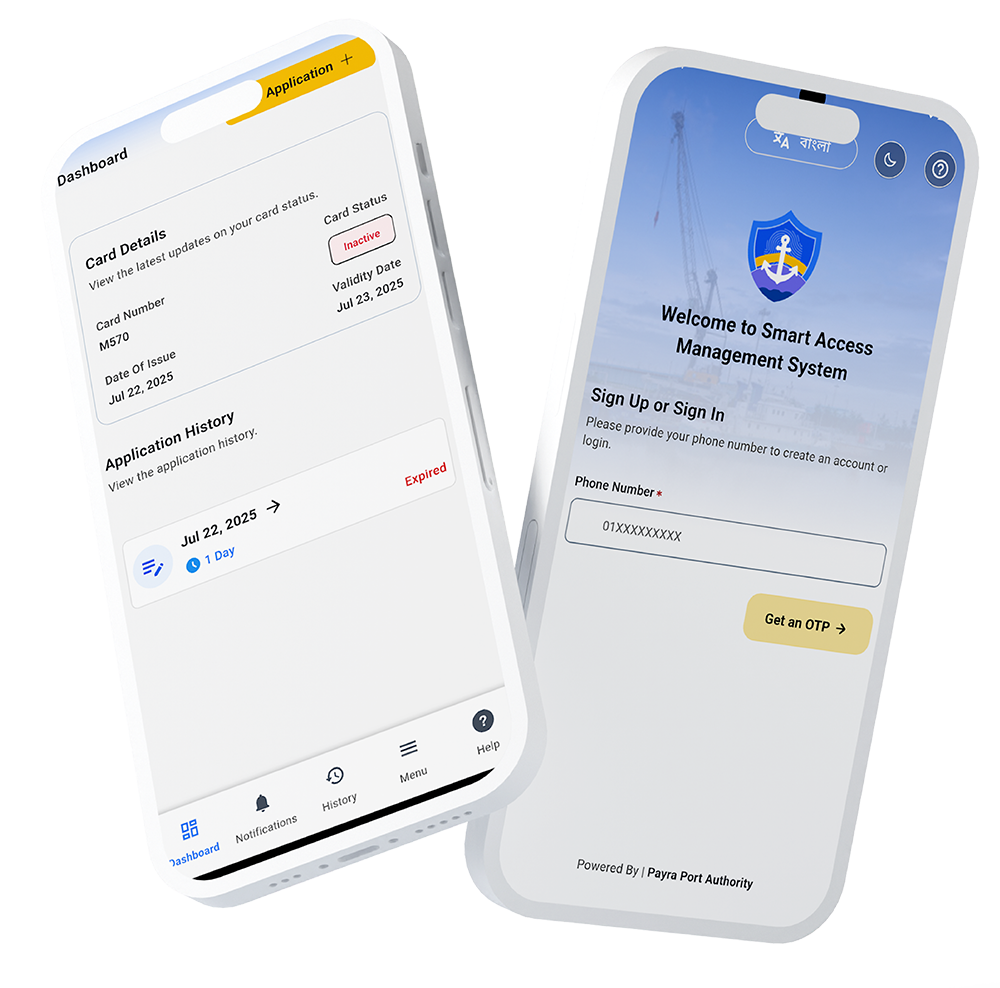
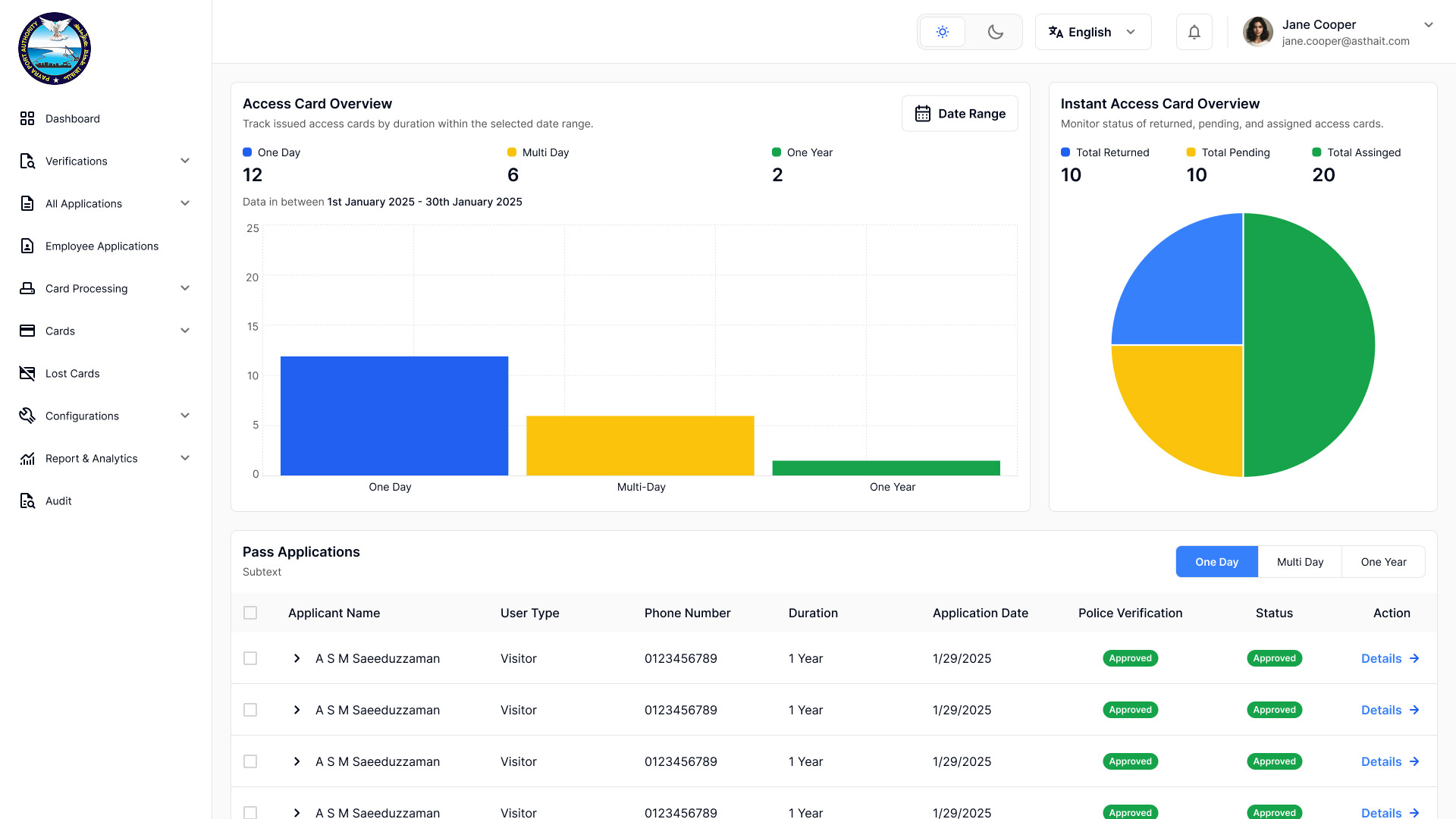
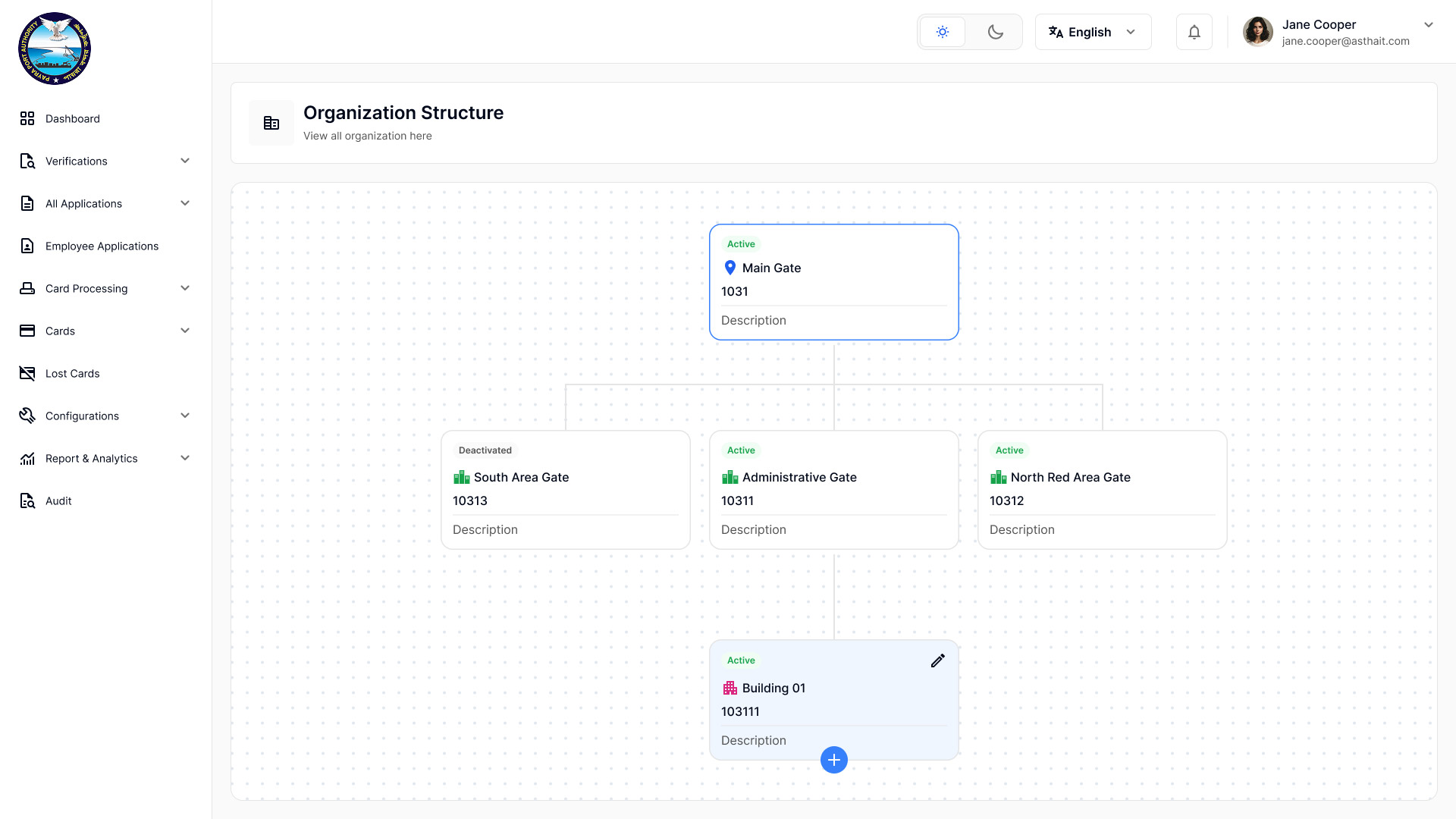
To modernize this crucial security layer, Payra Port Authority partnered with AIT to build the Smart Access Management System (SAMS) – a comprehensive, bilingual, web-and-mobile platform capable of digitally managing thousands of people and vehicles entering and exiting the port every single day. This wasn’t just another automation project. This was about designing a system that would support a high-security maritime environment, combat continuous operational pressure, ensure ISPS Code compliance, and eliminate long-standing bottlenecks that had held the port back.
The Problem
The challenges went deeper than simple delays.
- Security Vulnerabilities: The manual system lacked the verification rigor required for a high-security maritime zone, leaving room for costly errors.
- Traffic Congestion: Manual gate checks regularly created long queues affecting port logistics.
- Lack of Accountability and Audit Trail: Tracking movements or retrieving records for audits was extremely difficult.
- Inefficiency and Time Consumption: From form submission to gate entry, the entire process was slow, error-prone, and labor-intensive.
- Data Management Issues: Handling, storing, and retrieving physical documents made reliable record-keeping nearly impossible.
In short, Payra Port required an intelligent, comprehensive, and mission-critical access management ecosystem – not just a simple workflow upgrade.
Why did Payra Port need a Smart Access Management System?
The goal was clear: create a fast, secure, digitally-verifiable access ecosystem that could maintain strict maritime security standards while supporting high-volume, real-time operations.
AIT set out to build a system that would:
- Strengthen internal security and eliminate unauthorized access
- Reduce gate congestion and improve operational throughput
- Replace the manual workflow with a scalable, automated, and auditable digital process
- Equip the port with the infrastructure needed for long-term modernization
Read on to learn how AIT built a next-generation access management system for Payra Port, elevating security, speed, and accountability across a critical national gateway.
The team that transformed this vision
The Payra Port SAMS development team consisted of 9 dedicated AITians.
1 Project Manager
1 Business Analyst
2 Backend Engineers
2 Frontend Engineers
1 UI/UX Designer
1 Quality Assurance Engineer
1 Mobile App Developer
AIT’s Approach
AIT adopted a holistic, user-centric strategy combining deep domain understanding, security compliance, and scalable software engineering.
The Solution

Md Soadrul Amin CSCM™
Deputy Director, MIS Payra Port Authority
The Impact
The impact this software is creating on Payra Port’s operations and the nation’s security is transformational.
- Stronger, Centralized Security: Only pre-authorized individuals and vehicles can enter backed by digital approval process, real-time monitoring, and police-approved clearance.
- 80% Higher Efficiency: The time required for access approval and entry has been significantly reduced through automated workflows.
- Reduced Traffic Congestion: Gate entry time has been reduced from hours to seconds.
- Increased Accountability & Transparency: Every access event is logged digitally, ensuring clear audit trails for compliance and security reviews.
| Metric | Before SAMS | After SAMS |
| Gate Processing Time | Hours | 10–15 seconds |
| Pass Issuance | Manual | Digital & Error-free |
| Employee Access | Uncontrolled | Role-based, secure |
| Audit Trail | Paper logs | Complete digital record |
| Verification | Manual | Integrated digitally with police & authority checks |
| Operational Cost | High | Reduced via automation |
- Reduced Operational Costs: The port no longer relies on manual paperwork, physical archiving, or excessive staffing for pass management.
- Smooth Adoption Across the Organization: The structured onboarding and training for PPA personnel ensured that the system could achieve rapid adoption and minimum operational friction resulting in long-term reliability and user confidence.
Payra Port Smart Access Management System has set a new benchmark for port operations in Bangladesh. It is the first sea port in Bangladesh to deploy a smart, automated access control system of this scale – setting a precedent for modernization across the maritime sector.
This system is more than just a software – It is a strategic national-scale transformation of security, efficiency, and digital governance.
By combining intelligent automation, airtight security protocols, law-enforcement integration, and real-time monitoring, the platform is redefining what access management looks like in Bangladesh’s maritime ecosystem.
AIT is proud to have partnered with PPA on this mission-critical initiative – one that strengthens national security, accelerates port operations, and establishes a new benchmark for smart port infrastructure in the region.
If your organization handles complex systems like this, we’d love to help you build technology that scales with your ambition. Explore our software engineering services and see how AIT can build scalable, secure, and intelligent systems tailored for real-world challenges.
 Work