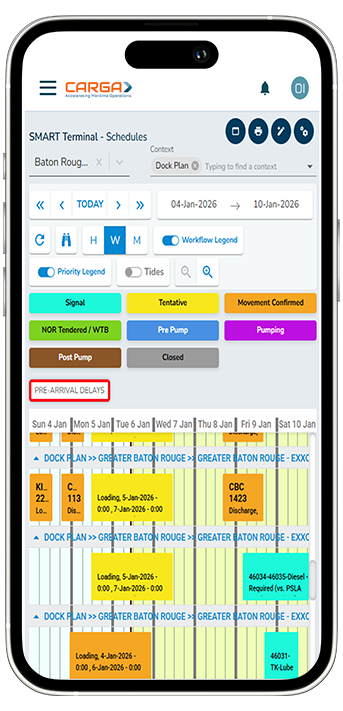
For decades, the maritime industry has relied on AIS data to see where vessels are. But in today’s complex global trade environment, simply knowing a ship’s location is no longer enough. Port authorities, shipping operators, and terminal managers need foresight – actionable intelligence that turns raw data into smarter decisions for vetting, scheduling, and allocation.
Carga was envisioned as the solution: a next-generation platform designed to unify maritime operations. However, the project has had its ups and downs. The AIT team inherited a major, unfinished version – a complex system riddled with bugs and little to no documentation. The challenge was not merely to complete the build – but to rescue, stabilize, and ultimately realize the platform’s full potential in maritime intelligence.
The Problem
The project came with multifaceted risks that threatened its viability and value proposition.
- Inherited instability and risk: Taking over an incomplete major release from another team meant inheriting significant technical debt. Numerous bugs and sparse documentation created an unstable foundation, jeopardizing system reliability for future users.
- Operational inefficiency and siloed data: The platform aimed to combine critical functions – ship vetting, crew management, port scheduling, and terminal allocation. But these modules were not seamlessly integrated. Users risked facing a fragmented experience, while data from diverse public and premium sources remained siloed, preventing the creation of a unified operational picture.
- Uncontrolled costs and poor performance: The existing infrastructure and codebase were not optimized, leading to high operational costs and subpar performance. This included reliance on expensive vendor services and bloated software packages that hampered system speed and scalability.
The team that transformed this vision
A dedicated team of 8 AIT experts was assembled to execute this complex rescue and transformation mission.
5 Full Stack Developers
2 DevOps Experts
1 Database Engineer
AIT’s Approach
The Solution

The Impact
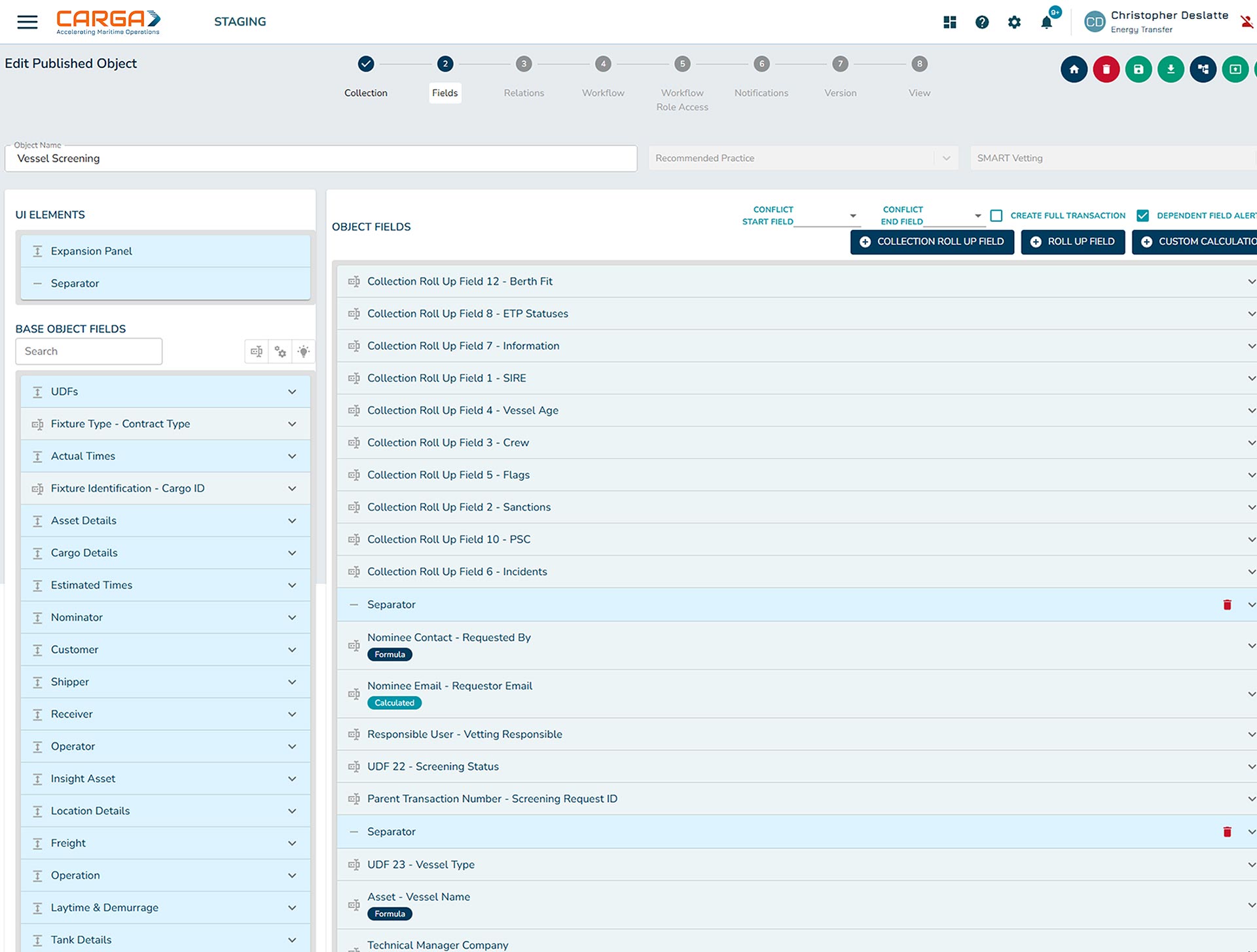
The transformation of the Carga platform has reshaped what maritime operators can expect from management software.
- From fragmented to unified operations: Ports and operators now manage vessels, crews, and logistics through a single pane of glass, replacing disparate tools and spreadsheets with a comprehensive, auditable digital workflow.
- Tangible cost savings and performance gains: Infrastructure optimization and vendor rationalization unlocked significant operational cost savings. Performance enhancements ensured the platform remains fast and responsive even under heavy data loads.
- Proactive, data-driven decision making: Users have shifted from reactive tracking to proactive management. Intelligent vetting and automated alerts mitigate risks earlier, while integrated data provides a competitive edge in scheduling and allocation.
Aspect | Before Optimization | After Optimization |
System State | Unstable, incomplete build with critical bugs | A stable, high-performance, and scalable platform |
Data & Modules | Siloed functions and disconnected data sources | Fully integrated modules with unified intelligence |
Operational Cost | High, inefficient infrastructure spend | Optimized, with significant recurring cost savings |
User Experience | Fragmented and likely inefficient | Streamlined, intuitive, and role-based |
Strategic Value | Basic vessel tracking and reporting | Actionable intelligence for vetting, scheduling, and planning |
The Impact of Carga’s Platform on Maritime Intelligence
Conclusion
Carga’s journey was more than a technical rescue – it was a strategic rebirth. By stabilizing its core, optimizing its performance, and enhancing its intelligence, AIT transformed an ambitious concept into a robust, market-ready platform that is redefining standards in maritime operations.
Today, Carga stands as a testament to how modern software engineering, grounded in deep domain understanding, can turn complex data into clear, decisive action for a global industry. The future of maritime intelligence is not just on the horizon; it is operational, scalable, and here!
Looking to transform a complex software project or build an intelligent platform for your industry? Explore our software engineering services to see how we can help you build technology that delivers clarity, efficiency, and a competitive edge.
 Work